
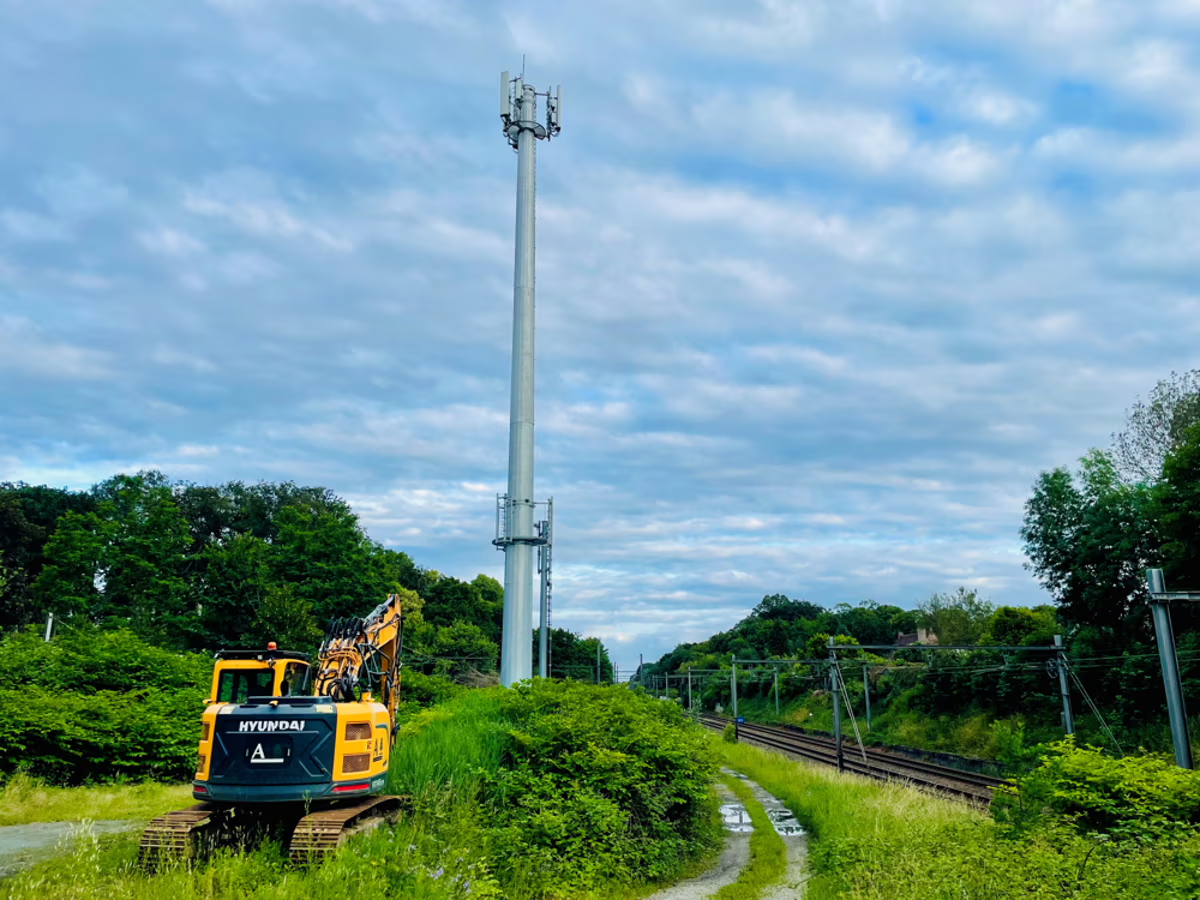
A key role in modernising Belgium’s rail infrastructure
Reliable communication is the backbone of a safe railway network. Today, Infrabel relies on GSM-R, a dedicated mobile communication network that connects train drivers and signalling control centres and plays a vital role in safety-critical applications, including emergency communications and the European Train Control System (ETCS).
While GSM-R has proven to be a robust and reliable technology for many years, the network is ready for its next evolution. Infrabel is therefore investing more than €4.2 million in the modernisation of its railway communication network and has awarded this contract to Citymesh.
Over the next five years, Citymesh will modernise 150 GSM-R sites across Belgium. The sites will be equipped with new radio equipment and redundant backup systems, preparing them for the transition to FRMCS (Future Railway Mobile Communication System), the next international standard for railway communications.
From reliable communication to intelligent railways
This modernisation goes far beyond a technological upgrade. It lays the foundation for the next generation of railway communications.
While GSM-R is primarily used for voice communication today, FRMCS will leverage 5G technology to enable the fast, secure and continuous exchange of large volumes of data. This will unlock innovative applications that further enhance the safety, capacity and efficiency of the railway network.
FRMCS will support future evolutions of the European Train Control System (ETCS) and enable technologies such as moving block signalling, where trains continuously communicate their exact position and speed. This allows safe separation distances to be calculated dynamically, making more efficient use of the available rail capacity.
With this project, Citymesh once again demonstrates its expertise in designing, deploying and managing mission-critical private mobile networks. The experience the company has built across industries, ports, airports and other critical environments is now being applied to one of Belgium’s most important pieces of national infrastructure.
